Wordscapes Search: Word Games
- 4.7
- Rating
- 10.00M
- Installs
- Free
- Price

 Analysis by App-foxy
I spent time with Wordscapes Search as a relaxed word game rather than treating it like a quick test of vocabulary. It combines letter hunting with scenic backgrounds, so the experience feels closer to a quiet puzzle break than to a competitive word challenge. That distinction matters: if you want a fast, pressure-heavy game, this may feel too gentle, but if you enjoy searching carefully through a group of letters, it has an easy rhythm to settle into.
The game comes from PeopleFun and sits in the word category. It is free to install, aimed at Everyone, and works on Android devices running version 7.0 or later. The current version is 1.47.2, while the game itself was released on November 22, 2019. Its broad audience is reflected in its reach: it has passed 10 million installs, with an average rating of 4.7 from around 229 thousand ratings and roughly 49 thousand written reviews.
How the search puzzles feel in everyday play
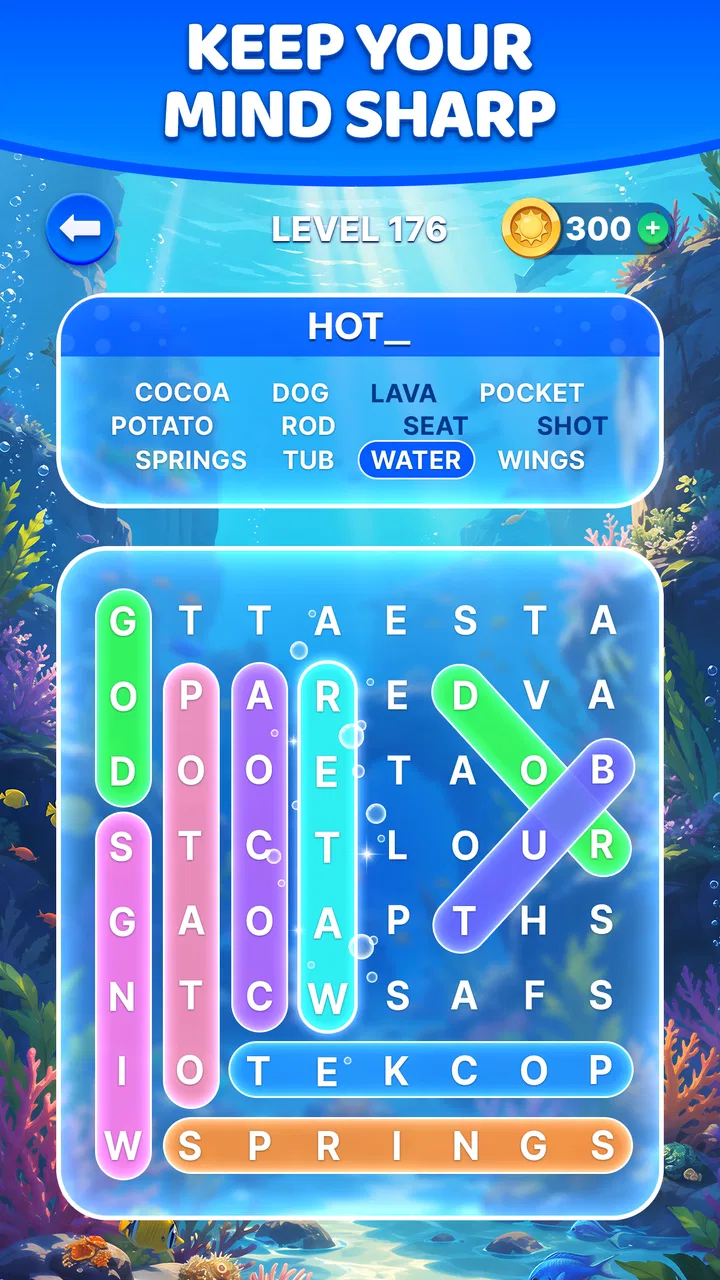
The central idea is simple. I look across a letter arrangement, find a word, and trace it rather than typing an answer into a box. That makes the game immediately approachable. There is no complicated opening tutorial to learn, and the basic interaction is comfortable enough for short sessions when I have only a few minutes available.
You May Also Like

 Blood Strike: 2.5 Anniversary
Blood Strike’s Loadouts Turn Every Drop Into a Tactical Gamble
A close look at Blood Strike’s custom loadouts: how fast access to signature weapons reshapes its battle royale rhythm, rewards preparation, and narrows the gap between fights.

 Pandora - Music & Podcasts
Pandora’s Music Is Easy to Start, but Harder to Recover
Pandora’s strength is its low-effort path from a seed to a station. Its weak spot is how much confidence it asks you to place in connection, setup, and quiet recovery.

 8 Ball Pool
 Is Built on Rivalries, Rematches, and Routine
A close look at the rivalries, rematches, shared routines, and unanswered safety questions that turn a quick pool match into a persistent mobile community.

 Samsung Music
’s Quiet Strength Is Playing What You Already Own
Its reach comes less from spectacle than from dependable access to a personal library. That simplicity is both the app’s strongest retention engine and its ceiling.

 AccuWeather: Weather Radar
AccuWeather Review: A Quick, Clear Forecast for Everyday Decisions
For everyday plans, the best forecast is the one you can understand quickly. AccuWeather makes rain timing, radar, and local conditions easy to act on, with a few trade-offs.

 Hill Climb Racing
Why Hill Climb Racing Still Turns Crashes Into One More Run
A tiny car, a bumpy hill and one more upgrade: Hill Climb Racing keeps resurfacing because its simple chaos makes every near-miss feel personal.
More From Our News Desk
View All News


What gives the game its identity is the combination of word searching and scenery. The visual presentation softens the task, making each puzzle feel less like an examination and more like a small activity attached to a peaceful backdrop. The scenery is not a replacement for strong puzzle design, but it helps create a mood that separates this game from bare word grids and more aggressively competitive vocabulary apps.
I found the best use case to be those in-between moments when I want something interactive but do not want to commit to a full game. It works while waiting for an appointment, during a quiet coffee break, or at the end of the day when a more demanding game would be tiring. Because the basic rules are so familiar, I can start playing without spending time remembering a complicated control scheme.
The simplicity also makes it suitable for sharing a device with family members who have different gaming habits. Someone who rarely plays games can understand the objective quickly, while a regular puzzle fan can focus on spotting words efficiently. The Everyone content rating supports that broad positioning, although individual comfort with small text, visual detail, and repeated searching will still vary from person to person.
A calmer alternative to timed word games
Compared with timed anagram games, this feels less stressful. In a timed format, I often end up scanning too quickly and missing obvious words because the clock becomes the real opponent. Here, the search itself is the main activity. That makes it a better fit for players who enjoy observation and patience more than speed.
It also differs from crossword-style games. A crossword usually gives me clues, crossing letters, and a stronger sense of deduction. Wordscapes Search instead asks me to notice words inside a visual arrangement. If you like solving from definitions, a traditional crossword app will probably offer more intellectual variety. If you prefer recognizing patterns and following letter paths, this approach is more direct.
Against word-building games that award points for creating many combinations from a rack of letters, the search format is less about inventing possibilities and more about discovering what is already placed in front of me. That reduces the pressure to know obscure vocabulary, though it can also make the experience feel repetitive for players who want constant strategic decisions.
Small habits that make the puzzles easier
My most useful adjustment was to stop reading the letters as a random collection. I scan in a consistent direction, then look for familiar endings and beginnings. Short words are easy to overlook because I instinctively search for longer ones first, so checking common two- or three-letter patterns before moving on often prevents me from getting stuck later.
Another helpful habit is to rotate my attention rather than repeatedly staring at the same area. When I search the same way several times, I tend to see only the words I already expect. Looking from the opposite side of the arrangement, or starting with a different letter, breaks that visual routine. This is a practical advantage of the search format: progress often comes from changing how I look, not from learning a new rule.
I also prefer playing in short rounds instead of forcing myself through a long sitting. Once my attention becomes impatient, I start dragging across letters without really checking the layout. A brief pause usually works better than random guesses. This is especially useful for children or casual players, because the game can remain a light activity instead of turning into a frustrating test of concentration.
For anyone using the game to practice English vocabulary, I would treat it as recognition practice rather than a complete language-learning tool. Finding a word in a puzzle can reinforce spelling and visual familiarity, but the game does not replace explanations, pronunciation work, or example sentences. It is most useful as a playful supplement for someone who already enjoys learning through repeated exposure.
Where the free model fits
The important cost detail is straightforward: the game is free to download and play, while in-app purchases range from $0.99 to $99.99 per item. That means I can try the core experience without paying upfront, which is valuable for a casual word game because I can judge the puzzle style before deciding whether it deserves any spending.
I would separate free access from paid value here. The free entry point makes sense for occasional players who want a few relaxing searches and do not need to customize or accelerate anything. Purchases may appeal to someone who plays frequently and is comfortable paying for optional conveniences, but the presence of a high upper purchase tier means I would check each transaction carefully rather than tapping through automatically.
There is no reason to buy anything simply to find out whether the game suits you. I would first play it free over several sessions, especially because the main appeal is the repeated search loop. If that loop already feels enjoyable without spending, then optional purchases can be considered on their own merits. If the basic activity feels repetitive, paying will not change the underlying fact that the central task is still word searching.
For parents, the free download is convenient, but the purchase range makes device-level purchase controls worth considering. The Everyone rating describes the intended content level, not a promise that every player will manage spending carefully. I would let a child play only with the same purchasing boundaries I use for any free-to-install game.
The value beyond the first few puzzles
The strongest value is accessibility. I do not need specialist word knowledge, a long uninterrupted session, or a powerful recent phone to understand what to do. The minimum operating system requirement of Android 7.0 or later also keeps the technical entry point relatively broad for Android users with older compatible devices.
The scenery adds a second kind of value. It gives the game a sense of place and makes the interface more pleasant than a plain list of puzzles. I would not choose it for scenery alone, but the visual layer makes repeated searches easier to return to. It is a good example of presentation supporting a simple mechanic rather than trying to hide one.
There is also value in the low learning curve. I can hand the game to someone else and explain the main action almost immediately. That makes it useful for households where one person likes games and another does not. It can also serve as a low-pressure way to occupy the hands during a break, provided the player enjoys word recognition and does not need deep strategic complexity.
Still, the value depends heavily on tolerance for repetition. The game does not appear designed around elaborate character systems, action mechanics, or a large strategic layer. Its appeal comes from doing a focused activity again and again in attractive surroundings. That is a strength when I want consistency, but a weakness when I am looking for novelty from one session to the next.
The tradeoffs I noticed while playing
The biggest limitation is that the search mechanic can become predictable. Once I understand the visual language of the puzzles, the challenge is mainly in finding the remaining words. Players who enjoy calm repetition may see that as satisfying. Players who want increasingly complex deductions may eventually feel that the game is asking for attention without offering enough new kinds of thinking.
The scenery can also cut both ways. It makes the game more inviting, but it does not fundamentally alter the puzzle. If I am in the mood for a crossword, a spelling competition, or a word game with a strong social component, a beautiful background will not make this a substitute. The presentation improves the atmosphere; it does not broaden the underlying genre.
Another tradeoff is the difference between casual and committed use. Free access is enough to test the game and enjoy it occasionally. A frequent player may start thinking more seriously about optional purchases, particularly if the game becomes part of a daily routine. Because individual items can reach $99.99, I would not describe every possible purchase as automatically good value. The right decision depends on how much the player actually returns to the game and what each purchase provides at the moment of checkout.
I would also skip it if I dislike tracing words through a visual layout. Some people prefer entering answers, solving clues, or competing against a clock because those formats give clearer feedback about skill. This game is not the right choice for someone who wants a demanding vocabulary curriculum or a highly tactical puzzle system.
Who is most likely to enjoy it
I think it is a strong match for casual word-game players who want a gentle routine. It suits someone who likes spotting familiar words, enjoys attractive scenery, and prefers a game that can be opened for a short break without a long explanation. It is also a reasonable choice for families looking for an Everyone-rated word activity, with the usual care around optional purchases.
It may work particularly well for players who find timed games tiring. The absence of a frantic pace in my experience gives me room to inspect the arrangement and try a different scanning method when I miss something. That makes the game more welcoming than speed-focused alternatives for people who want mental activity without pressure.
Language learners can get some benefit from repeated spelling recognition, but I would choose a dedicated learning app if structured lessons, definitions, pronunciation, or progress tracking are the main goals. Likewise, serious crossword fans may prefer clue-based puzzles, while competitive players may be happier with a head-to-head word game.
An everyday example is a short evening break after work. I can open the game, solve a few searches while looking at the scenery, and stop before the activity becomes a commitment. In that situation, its simplicity is exactly the point. On a long trip where I want a deep challenge that stays fresh for hours, I would bring a more varied puzzle collection instead.
My verdict on downloading or skipping it
Wordscapes Search earns its place as a free, approachable word game with a calm visual style. I like it most when I want a small mental reset rather than a test of advanced vocabulary. The combination of easy controls, search-based puzzles, and scenery gives it a clear personality, and the broad install base and 4.7 average suggest that this formula has connected with many players.
I would download it if you enjoy finding words hidden in letter arrangements and want something suitable for short, low-pressure sessions. I would start without spending, play enough to see whether the repeated search loop holds my attention, and treat any later purchase as optional rather than necessary. That approach keeps the free entry point genuinely useful while avoiding the assumption that a higher-priced item automatically improves the experience.
I would skip it if you need clues, competitive timers, detailed language instruction, or a constantly changing strategic system. The game knows what it wants to be: a scenic word-search experience that is easy to pick up and comfortable to revisit. In my view, that focused design is worthwhile for the right player, but it is also the reason not everyone will find lasting value in it.
FAQs for Wordscapes Search: Word Games
01What is Wordscapes Search: Word Games about?
Wordscapes Search: Word Games is a puzzle game that challenges players to find hidden words within a grid of letters. The game combines elements of word search puzzles and crossword games, providing an engaging way to improve vocabulary and cognitive skills. It's designed for all ages and offers various difficulty levels to keep users entertained and mentally stimulated.
02Is Wordscapes Search: Word Games free to play?
Yes, Wordscapes Search: Word Games is free to download and play. However, the game includes in-app purchases for hints and additional features that can enhance gameplay. These purchases are optional, and players can enjoy the full experience without spending money, although it might require more patience and effort to progress.
03What platforms is Wordscapes Search: Word Games available on?
Wordscapes Search: Word Games is available on both Android and iOS platforms. Users can download the app from the Google Play Store for Android devices and the Apple App Store for iOS devices. The game is optimized for both smartphones and tablets, providing a seamless experience across different screen sizes.
04Does Wordscapes Search: Word Games require an internet connection?
No, Wordscapes Search: Word Games does not require a constant internet connection to play. Users can enjoy the game offline, making it a great option for travel or when internet access is limited. However, certain features such as in-app purchases and updates will need an internet connection.
05How does Wordscapes Search: Word Games handle data privacy?
Wordscapes Search: Word Games collects minimal personal data necessary for enhancing user experience and gameplay. The app complies with standard privacy regulations, ensuring that user data is protected. It’s always advisable to review the app's privacy policy for detailed information on data collection and user rights.
Pros
- Engaging puzzles that boost vocabulary
- Vibrant graphics enhance user experience
- Offline play available for on-the-go fun
- Simple
- user-friendly interface
- Regular updates with new levels
Cons
- Contains in-app purchases
- Ads can be intrusive for free users
- Limited hints without purchases
- Requires internet for some features
- May drain battery over long play sessions

Wordscapes Search: Word Games
Gallery